In 2026, the static image is no longer enough to sustain a high-end career. The world moves at 24 frames per second, and photographers who fail to pivot to motion are seeing their day rates dwindle.
The transition from photography to video production is often underestimated. Many photographers assume that because they understand composition and exposure, they "already know" video. This is a dangerous misconception. Video is a different language—it requires a new understanding of time, rhythm, and technical discipline. As a Senior DP, I've mentored dozens of photographers through this pivot. Here is the blueprint for a professional transition in 2026.
I. THE SHUTTER ANGLE MASTERY
The first technical hurdle every photographer faces is the **Shutter Speed Rule**. In photography, you use shutter speed to freeze motion or create blur. In video, shutter speed (or angle) must be locked to maintain "Organic Motion Blur."
The standard is the **180-Degree Rule**: Your shutter speed should be double your frame rate. If you are shooting at 24fps, your shutter must be 1/50 of a second. This creates the motion blur that the human eye perceives as "cinematic." Violating this rule results in the "Soap Opera Effect" (too smooth) or "Choppy Action" (too fast). Master this, and your work immediately moves out of the "amateur" category.
II. CONTINUITY & COVERAGE: Thinking in Sequences
Photographers think in "frames." Cinematographers think in **Sequences**. One beautiful shot does not make a video; it's the relationship between that shot and the five shots that follow it.
You must learn to shoot for **Coverage**:
- The Master Shot: The wide view that establishes the scene.
- The Medium: Focuses on the character and their interaction.
- The Close-Up: Captures the emotion and the nuances.
- The Cutaway (B-Roll): The details that help hide edit points.
Without proper coverage, your editor will be unable to tell a coherent story. Transitioning to video means training your brain to see the "Story Arc" of a 30-second sequence, not the perfection of a single click.
III. SOUND: The Literal Half of Video
The biggest giveaway of a "photographer doing video" is poor audio. In my 15 years in production, I've heard it a thousand times: *"I'll just use the on-camera mic and fix it in post."* You cannot fix bad audio in post.
The Golden Rule of Audio
Audiences will forgive a soft focus or a grainier image, but they will immediately turn off a video with hissing, echoing, or peaking audio. Investment in a professional XLR preamp, a high-end shotgun mic (like the Sennheiser MKH-416), and a dedicated field recorder is mandatory. Sound is 50% of the cinematic experience.
IV. RIGGING FOR STABILITY & SCALE
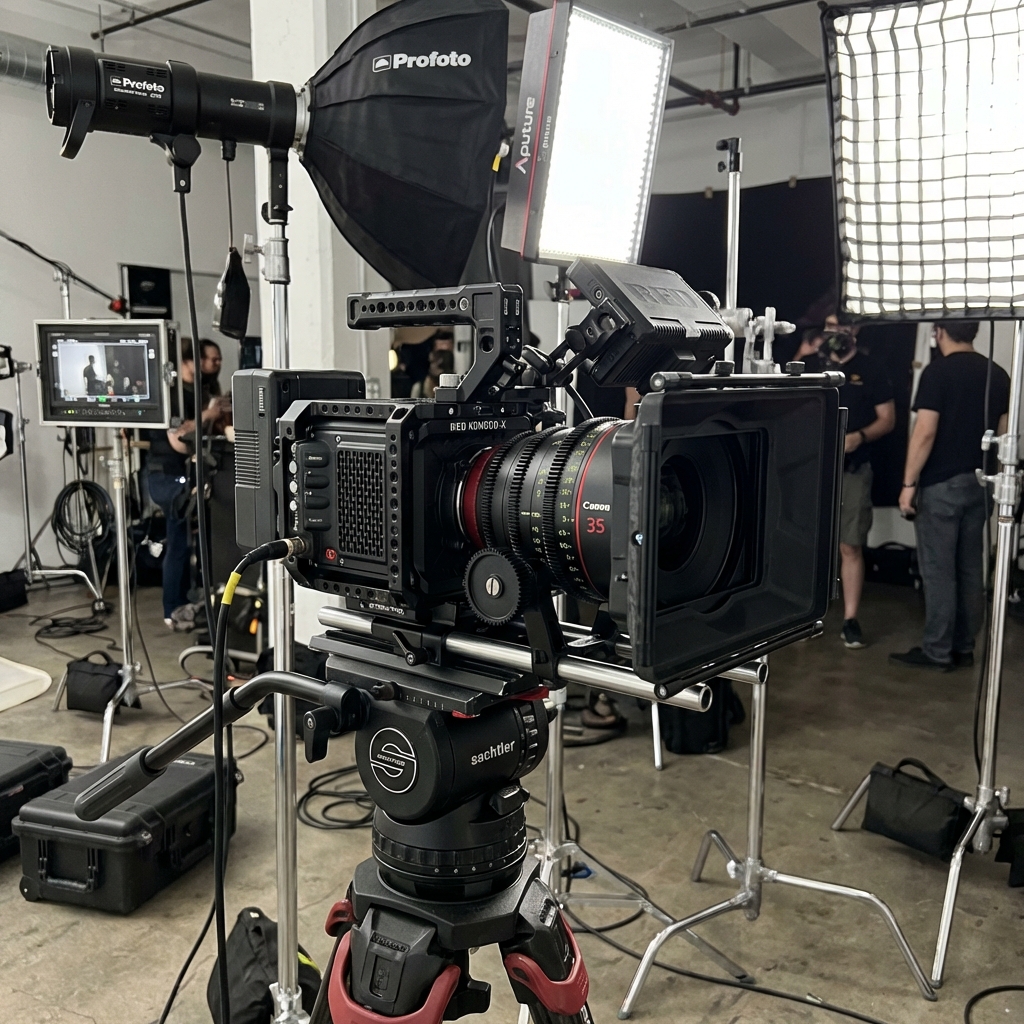
Handheld photography is light and organic. Handheld video—unless you are shooting a high-budget shaky-cam documentary—usually looks like a mistake. The weight of a professional cinema rig (Cage, Monitor, V-Mount Battery, Follow Focus) is intentional. It creates **Inertia**, which results in smoother, more professional handheld movement.
If you are serious about the pivot, you must move beyond the "Mirrorless Body" and start building a **Production Rig**. This includes a professional fluid-head tripod (Sachtler or Miller) and a gimbal system for tracking shots. Stability is the hallmark of authority.
V. THE HYBRID MINDSET: 2026 Reality
The label "Photographer" is becoming a specialty niche. The label **"Visual Artist"** is the future. In 2026, the top-earning creatives on CamJobz are those who can provide a holistic visual strategy. They shoot the hero stills for the campaign and the 4K video for the commercial simultaneously.
This "Integrated Shoot" model is more efficient for the client and more lucrative for you. By mastering both stills and motion, you make yourself indispensable. You aren't just a vendor; you are the entire visual department.
THE VERDICT
The jump from photography to video is wide, but it is traversable. Focus on the technical discipline of the 180-degree rule, the narrative discipline of coverage, and the extreme discipline of professional audio. The frames you already have; now it's time to make them move.
Join the Motion Transition Masterclass
Full walkthrough on rigging, audio routing, and sequence planning for stills-first creatives. Live in the CamJobz Journal.
Browse Talent Gigs