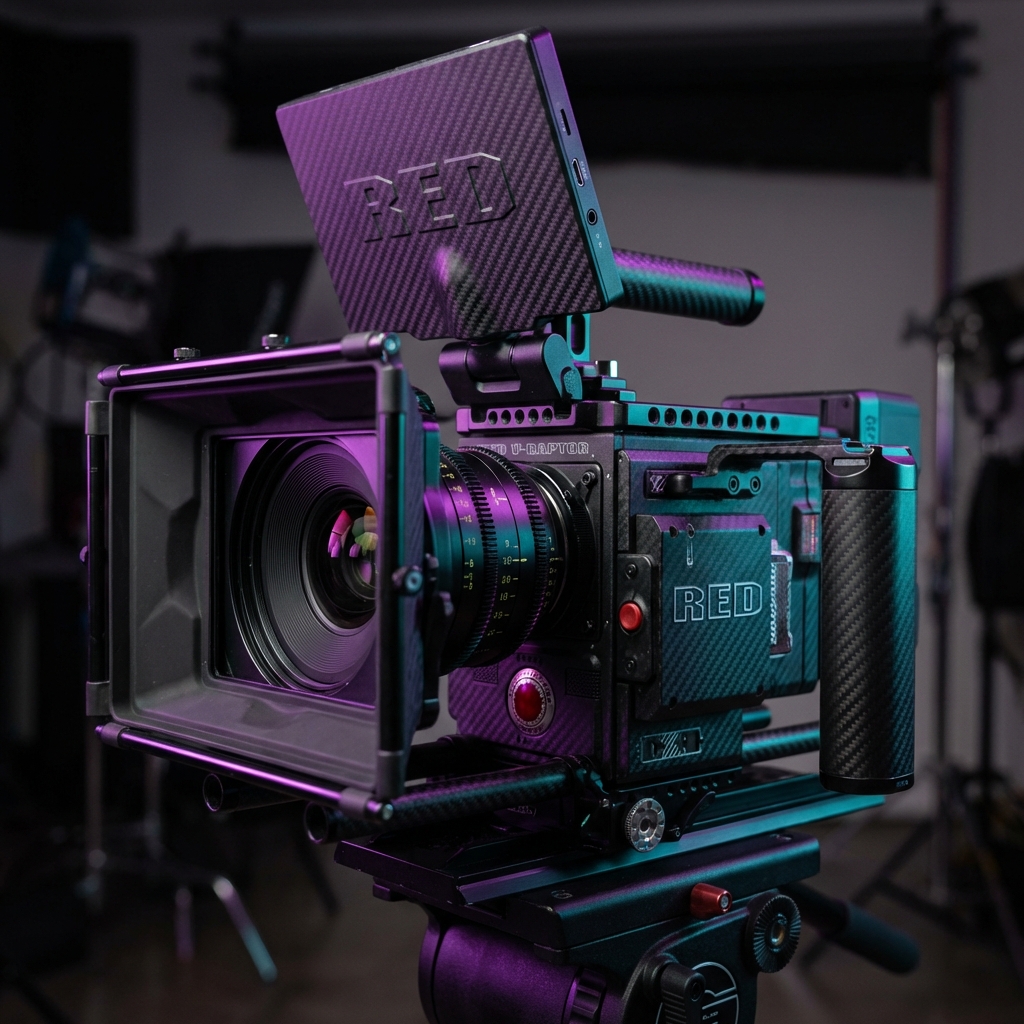
In 2026, the question "What camera should I buy?" is no longer about resolution. We have hit the ceiling of human perception. The real battle is now fought in the realms of Color Science, Dynamic Range stability, and Post-Production efficiency.
I. THE ANCHOR: The Global Shutter Standard
The biggest shift in 2026 equipment is the mass-market adoption of **Global Shutter** sensors. For years, the rolling shutter "jello" effect was the hallmark of DSLR and mirrorless video. Today, even entry-level professional cinema bodies have moved to Global Shutter, a move driven by the demands of virtual production (LED volumes) and high-speed automotive work.
Choosing a camera in 2026 without considering its performance under flickering LED lights or fast-moving subjects is a career-limiting move. The industry "gold standard" has shifted from "How many pixels?" to "How accurate is the motion?"
II. THE TECHNICAL BREAKDOWN: Internal RAW or Bankruptcy
As post-production workflows become more aggressive with AI-assisted skin retouching and virtual set extensions, the need for high-bitrate **Internal RAW** has become non-negotiable. 10-bit 4:2:2 is now the "minimum floor" for commercial work, but the elite freelancers are moving toward 12-bit Log-encoded RAW files.
Thermal management has also seen a revolution. The overheating issues of the 2022-2024 era are largely solved through advanced Peltier cooling systems, allowing these compact bodies to run for 12+ hours on a hot desert set without failure.
2026 Camera Spec Comparison
| Model | Sensor Type | Internal RAW | Best Use Case |
|---|---|---|---|
| Sony FX6 Mk II | Full Frame (GS) | 12-bit Cinema RAW | Doc/Run-and-gun |
| RED Komodo-X | Super 35 (GS) | REDCODE RAW | Commercial/Action |
| BM Pyxis 6.8K | Full Frame | Blackmagic RAW | Indie Film/Budget Commercial |
III. THE ROI ANALYSIS: The "Buy vs. Rent" Dilemma
One of the most frequent questions we get at CamJobz is whether to own a rig or rent it per project. In 2026, the "Break-Even" point has shifted. Due to the rapid iteration of digital sensors, a camera body usually maintains its "Top-Tier" status for exactly 18 months before a new standard emerges.
If you cannot bill out 40 days of camera rental within a 12-month period, you are financially better off renting a high-end Arri or Venice for specific gigs. Ownership is for the "A-Rig" you use 80% of the time; everything else belongs in a rental house.
IV. THE EXPERT VERDICT: My 2026 Recommendation
If I were starting as a freelancer today with a $15,000 budget, I wouldn't spend $10,000 on a body. I would spend $6,000 on a proven workhorse (like the FX6 Mk II), $4,000 on high-end vintage glass (an investment that appreciates), and the remaining $5,000 on lighting and audio.
A $20,000 camera with poor lighting looks like a $500 vlog. A $2,000 camera with professional lighting looks like Netflix. In 2026, the prestige is in the "Light-to-Data" conversion, not the logo on the side of the box.
Download the Full 2026 Gear Index
Join our Private Reports to see the full list of 50+ audited cameras and lenses.
Join Private Reports